



Key Takeaways
Exosomes, peptides and NAD+ are three of the most closely watched areas in skincare science right now, but they are not equally understood or equally proven. Peptides carry decades of clinical evidence and are already at work in RATIONALE's #4 The Eye Crème, its most peptide-concentrated formulation; exosomes and NAD+ remain genuinely promising areas of research without the same weight of topical, cosmetic-grade evidence behind them yet. Knowing the difference is the first step to building a ritual around what actually works, rather than what is simply being talked about.
A little over 18 months ago, almost nobody outside a research laboratory was talking about exosomes. Today, searches for what are exosomes in skincare sit alongside questions about NAD+ with the two names moving quickly from research literature into skincare formulation, and into the questions clients are asking. Sitting alongside them is peptides, a class of actives so established it barely registers as new science at all, studied and formulated with for more than three decades.
Not every emerging active is ready for your skin, and not every claim that sounds scientific has been tested to the standard it implies. The temptation is either to adopt every new name as soon as it appears, or to dismiss all of it as unproven—and neither response serves your skin particularly well.
Here, we’re taking a closer look at what exosomes, peptides and NAD+ actually are, what each is truly capable of, and where the science currently stands for each one.
What Are Exosomes?
Exosomes are microscopic extracellular vesicles—tiny, membrane-bound packages that nearly every cell in the body releases as a way of communicating with other cells. Inside each exosome sits a cargo of proteins, lipids and genetic material, gathered from the cell that produced it and delivered to whichever cell receives it. In skincare, the theory is that applying exosomes topically (typically derived from plant, stem cell or platelet sources), could deliver some of that same cellular signalling directly to the skin, supporting the visible signs of renewal from the outside in. It is this proposed mechanism that answers how exosomes work on skin, at least in theory: not through mechanical exfoliation or a single active ingredient, but through cell-to-cell communication.
It is an elegant piece of biology, and it explains why exosomes have moved from dermatology research into cosmetic formulations so quickly. A 2024 systematic review published in Aesthetic Surgery Journal Open Forum (Ash et al.) examined the growing landscape of topical exosome therapies alongside more established actives like peptides, and found early, promising signals for skin regeneration, alongside a clear gap in large-scale, standardised clinical trials. A separate 2025 review in the journal Cosmetics (Villarreal-Gómez et al.) reached a similar conclusion: exosomes show real plausibility for cosmetic use, but the field lacks the volume of controlled, peer-reviewed, topical-specific evidence that more established actives have accumulated.
There is also a regulatory dimension worth understanding. In Australia, cosmetic ingredients are assessed differently to therapeutic goods, and exosome-containing products marketed for cosmetic use sit in an undetermined category—one where the science is moving faster than the regulatory framework built to assess it. That’s not a reason to dismiss exosomes outright, but it is a reason to be honest about where the evidence currently sits, rather than treating an exciting theory as an established fact — the same honesty RATIONALE applies to every active reviewed via RATIONALE Research, whether or not it ends up in a formulation.
What Are Peptides?
Peptides are short chains of amino acids, that is, the same building blocks that make up the proteins your skin already produces, that act as biological messengers. Rather than doing the structural work themselves, peptides signal skin cells to behave differently: supporting the skin's own collagen production, reinforcing the skin barrier, and promoting a visibly firmer, more resilient complexion. Because they mimic signals the skin already recognises, well-formulated peptides are one of the most extensively studied classes of active ingredients in skincare.
This is not new territory for RATIONALE. A dedicated look at how peptides work at the cellular level, the different peptide classes, and why formulation quality determines whether a peptide actually reaches its target lives in Peptides in Skincare: What They Are, How They Work, and Why Formulation Matters.
What Is NAD+?
NAD+ (nicotinamide adenine dinucleotide) is a coenzyme present in every cell in the body, where it plays a central role in converting nutrients into cellular energy and supporting the enzymes involved in cellular repair. NAD+ levels are known to decline with age (a well-established finding in ageing research more broadly) which has led to growing interest in whether restoring NAD+ levels, either systemically or topically, could support skin that shows the visible effects of that decline.
The biological reasoning is certainly compelling: cells with more available energy and better-functioning repair enzymes should, in theory, perform better. A 2024 study (Kang et al., published in Cells) looked at one way to make topical NAD+ more effective: blocking an enzyme called CD38, which normally breaks NAD+ down before it can act. It's a promising early direction for future formulations. That said, most of the strong human evidence for NAD+ still comes from systemic or intravenous use, not topical skincare. So, while the science is real, how well it penetrates skin, and stays stable once formulated, is still being studied and is currently in evaluation within RATIONALE's formulation labs via RATIONALE Research.
Exosomes vs Peptides vs NAD+
| Active | What It's Meant to Do |
|---|---|
| Peptides | Signal skin cells to support collagen production, reinforce the barrier, and promote a visibly firmer complexion. |
| Exosomes | Deliver cellular signalling cargo theorised to support the visible signs of skin renewal. |
| NAD+ | Support cellular energy production and repair enzyme activity. |
Can These Actives Work Together in a Ritual?
While this question is less emphatic in the conversations surrounding these more emergent areas of skincare, in principle, there is no biological reason why exosomes, peptides and NAD+ would conflict with one another; each works through a different mechanism, and a skincare ritual can generally accommodate multiple actives when they are introduced thoughtfully. In practice, however, the more considerate answer depends on which of the three you can actually access in a properly formulated, clinically supported form.
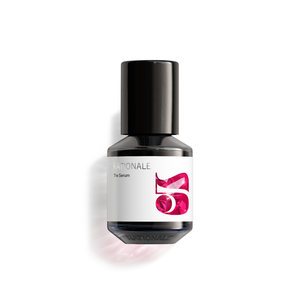
Peptides are the one you can incorporate into your ritual today with confidence, provided the formulation itself is engineered to deliver a meaningful concentration to the skin. Peptides are inherently delicate, and both the concentration and delivery system determine whether they reach their target rather than breaking down on the skin's surface. This is precisely what #4 The Nourishing Eye Crème, RATIONALE's most peptide-concentrated formulation, is built to answer. Its Peptide Complex, a proprietary blend of six peptides (detailed in full in RATIONALE's Ingredient Glossary), is paired with a Soothing Complex, Peach Resin Extract and a Ceramide Complex to support the eye area specifically—where skin is thinner, more delicate, and often where visible signs of ageing appear first. In a 28-day trial, 87% of participants reported visibly diminished dark circles, 80% observed enhanced firmness and plumpness, and 76% saw an improvement in the appearance of fine lines. Peptides, in various formats, also feature in #2 The Brightening Light Crème, #4 The Nourishing Crème, and #5 The Refining Milk Concentrate.
Exosomes and NAD+ are a different story for now. NAD+ is currently under review, trial and formulation testing through RATIONALE's own research and development labs, and exosomes remain under close research review — but until a stable, penetration-tested, clinically supported topical formulation exists for either, they are difficult to recommend as part of a daily ritual. That isn't because the underlying biology isn't interesting; it's because interesting biology and a formulation proven to deliver it to your skin are not the same claim.
RATIONALE's Approach to Emerging Actives and Formulation Innovation
RATIONALE's manifesto puts it plainly: we value the investment of time, not the transience of trend. That principle shapes how our research faculty engages with emerging actives and evolving areas of skincare science, including exosomes and NAD+ — two of the most closely-watched developments in the field today.
Being a research-led laboratory means having the discipline to work through a promising active properly before it reaches a formulation. NAD+ is a case in point: it is currently in evaluation within our Research laboratory, where the same standard applied to every active in the Essential Six—stability, penetration, and topical-specific clinical evidence—is being worked through before any formulation is finalised. Exosomes remain under the same close research review, without the same formulation activity behind them yet.
This is also why peptides occupy the place they do within RATIONALE Research and the Essential Six today. Not because they are new, but because the formulation science behind them, and the clinical evidence supporting #4 The Eye Crème specifically, has already been proven. If and when RATIONALE introduces NAD+, exosomes, or any other emerging active into a formulation, it will be because that same standard has been met.
Frequently Asked Questions
Exosomes are tiny extracellular vesicles that cells use to communicate, carrying proteins and genetic material between them. Applied topically, they are generally considered low risk from a safety standpoint, though the category is not uniformly regulated in Australia, and sourcing quality varies significantly between products.
NAD+ is a coenzyme every cell needs for energy production and repair, and its levels are known to decline with age. An emerging area of study in formulation science, it has attracted growing interest alongside conversations in longevity science more broadly—with study in topical, cosmetic application continuing to deepen.
The underlying biology is genuinely interesting and an active area of research, but topical-specific, cosmetic-grade clinical evidence is still limited compared to more established actives. That evidence is currently being worked through in RATIONALE's own formulation labs — in the meantime, it is worth watching to understand what the research and studies conclude about this active.
Peptides are short amino acid chains that signal specific cellular responses, such as supporting collagen production, and are backed by decades of topical clinical research. Exosomes are more complex vesicles carrying a broader cargo of biological material.
There is no known biological conflict between the three. The practical limitation is access to a stable, clinically supported topical formulation for exosomes and NAD+ — peptides can be incorporated with confidence today, via a well-formulated formulation such as #4 The Eye Crème, while the other two are best approached with realistic expectations for now.
Not based on current evidence. Niacinamide (Vitamin B3) has an extensive, well-established body of topical clinical research behind it, while topical NAD+ evidence remains comparatively early. For a client seeking a proven, multi-corrective active today, niacinamide currently has the stronger evidence base of the two.
Where to Begin
Of the three actives explored here, peptides are the one ready to be part of your ritual today — proven, formulated correctly, and already delivering visible results for clients using skincare formulations like #4 The Eye Crème. If diminished dark circles and firmer, smoother skin around the eyes is a skin goal you are working towards, it is a considered place to start.
Exosomes and NAD+ are worth continuing to follow — RATIONALE's laboratory certainly is, with NAD+ currently moving through our own Research facilities and formulation labs — but neither is yet where your ritual should place its confidence. If you would like guidance on which formulations suit your skin goals now, connect with a Client Service Advisor via the Skin Questionnaire for a personalised recommendation.
References
- Ash M, Zibitt M, Shauly O, Menon A, Losken A, Gould D. "The Innovative and Evolving Landscape of Topical Exosome and Peptide Therapies: A Systematic Review of the Available Literature." Aesthetic Surgery Journal Open Forum. 2024;6:ojae017. DOI: 10.1093/asjof/ojae017.
- Villarreal-Gómez LJ, Origel-Lucio S, Hernández-Hernández DA, Pérez-González GL. "Use of Exosomes for Cosmetics Applications." Cosmetics. 2025;12(1):9. DOI: 10.3390/cosmetics12010009.
- Kang S, Park J, Cheng Z, Ye S, Jun SH, Kang NG. "Novel Approach to Skin Anti-Aging: Boosting Pharmacological Effects of Exogenous Nicotinamide Adenine Dinucleotide (NAD+) by Synergistic Inhibition of CD38 Expression." Cells. 2024;13(21):1799. DOI: 10.3390/cells13211799.
- Gorouhi F, Maibach HI. "Role of topical peptides in preventing or treating aged skin." International Journal of Cosmetic Science. 2009;31(5):327-345.
- Errante F, Ledwoń P, Latajka R, Rovero P, Papini AM. "Cosmetic Peptides in Skincare: A Systematic Review of Clinical Evidence." Cosmetics. 2020;7(4):92.