



Key Takeaways
Peptides are short chains of amino acids that act as biological messengers – signalling your skin to produce more collagen, support its barrier, and repair daily damage. Whether they actually deliver those results depends almost entirely on the formulation around them. A well-formulated, multi-peptide approach can visibly firm, refine, and restore the complexion over eight to twelve weeks of consistent use.
What Are Peptides and What Do They Do for Skin?
Peptides are chains of amino acids; the same building blocks that make up every protein in the human body, including collagen, elastin, and keratin. Where a full protein contains thousands of amino acids, a peptide contains between two and fifty. That smaller size is what makes them useful in skincare: they can be absorbed into the skin, where they act as biological signals, telling skin cells to perform specific tasks.
The peptides used in clinically designed formulations fall into four distinct classes, each working differently.
Signal peptides communicate directly with the dermis, telling fibroblast cells to produce more collagen and elastin. Some are derived from fragments of procollagen itself; they present skin with a signal of breakdown, prompting it to rebuild. They are the most extensively studied peptide class for visible firming outcomes.
Carrier peptides transport trace elements, particularly copper, into the skin where they are needed for structural protein synthesis. Copper Tripeptide-1 delivers copper to the fibroblasts that produce collagen, supporting the cross-linking process that gives collagen its strength.
Neurotransmitter-modulating peptides work at the muscle level rather than in the dermis. They soften the micro-contractions of small facial muscles that contribute over time to expression lines, not through paralysis, but by gently quieting the nerve-to-muscle signal. Results build gradually with consistent use.
Structural peptides protect the collagen and elastin already present in skin from breakdown–whether from glycation, enzymatic degradation, or the cumulative effects of solar and environmental damage.
Understanding these four classes explains why a multi-peptide formulation delivers results that a single-peptide preparation cannot match.
The Benefits of Peptides for Skin
The clinical evidence for topical peptides is substantial. A review published in the International Journal of Cosmetic Science (Gorouhi and Maibach, 2009) found that topically applied peptides produce measurable improvements in skin firmness, texture, and the visible signs of ageing with consistent use. Five benefits are consistently supported by research.
1. Collagen stimulation. Signal peptides switch on the production of collagen types I, III, and IV in the dermis. These are the structural proteins that keep skin firm and resilient. Research by Katayama et al. in the Journal of Biological Chemistry (1993) showed that procollagen-derived peptides directly stimulate extracellular matrix production and the formation of new collagen fibres.
2. Visible firming and improved elasticity. As collagen and elastin production increases, skin becomes structurally stronger. Clinical assessments consistently show improvements in firmness over eight to twelve weeks, approximately the time needed for newly formed collagen to be woven into the skin's structure.
3. Skin barrier strengthening. Certain peptide classes support the proteins that hold the skin barrier together, including the tight junctions that regulate what passes into the dermis. A stronger barrier retains hydration more effectively and is more resilient to environmental stress.
4. Expression-line softening. Neurotransmitter-modulating peptides such as Acetyl Hexapeptide-37 and Acetyl Octapeptide-3 reduce the visible intensity of expression lines without affecting normal facial movement. Their effect is progressive, building over weeks of consistent use.
5. Protection against glycation. Glycation, where sugar molecules bind to and stiffen collagen fibres and presenting as cross-hatching on the skin, is one of the less-discussed drivers of visible skin ageing. Structural peptides such as Tripeptide-9 Citrulline help protect collagen from this process, supporting the look of supple, resilient skin over time.
How Peptides Work: The Cellular Science
When a signal peptide is absorbed into skin and reaches the dermis, it binds to receptors on fibroblast cells. This triggers a chain of molecular signals that switches on the genes responsible for producing collagen and elastin. The peptide is not adding collagen from the outside–it is instructing the skin to produce more of its own.
This is why peptides matter: they work with the skin's own biology. Skin is already producing collagen, simply at a rate that slows with age and accelerates under solar and environmental stress. Peptides restore a signal that has gradually weakened. The result, with consistent use, is skin that behaves more as it once did: producing more structural protein, repairing daily damage more effectively, maintaining a firmer surface.
The case for carrier peptides rests on an equally precise mechanism. Copper is essential for the enzyme that cross-links collagen and elastin fibres into their stable, mature structure. Without adequate copper at the site of synthesis, those fibres are weaker and less durable. Copper Tripeptide-1 delivers copper directly to the fibroblast environment where it is needed. Beyond delivery, multiple studies have found that it also exhibits antioxidant activity and supports the skin's own repair processes (Pickart and Margolina, International Journal of Molecular Sciences, 2018). Further evidence across peptide classes is catalogued on the RATIONALE Research hub.


The Formulation Problem: Why Not All Peptide Formulations Perform Equally
Understanding the science of peptides is only part of the picture. What determines whether a peptide formulation produces clinical results, or none at all, is the formulation those peptides travel in.
Peptides are fragile molecules. Most signal peptides are active only within a narrow pH range; a formulation that falls outside it can leave them inactive before they reach the skin. Certain common preservatives can break peptide bonds, destroying the molecule. And stability matters over time; a poorly stabilised formulation may contain active peptides when it is filled but significantly fewer by the time it reaches the bathroom vanity.
Penetration is a further challenge. Most peptides, in their basic form, cannot easily cross the skin's outer lipid layer. Adding a fatty (palmitoyl) tail to the peptide molecule–as in Palmitoyl Tripeptide-5, Palmitoyl Hexapeptide-52, and Palmitoyl Heptapeptide-18–addresses this directly. The lipid tail improves the peptide's affinity for the skin surface, helping it absorb into the skin rather than sitting on top of it.
A systematic review of cosmetic peptides (Errante et al., Cosmetics, 2020) found that clinical evidence is consistently strongest for well-designed formulations–those where the delivery system, pH, and peptide architecture are engineered together, not assembled from generic ingredients. The active and the formulation are inseparable; one cannot perform without the other.
This is the principle that has guided formulation at RATIONALE's research laboratory from the beginning. It is also the principle behind RATIONALE's proprietary Peptide Complex: a blend of six peptides – Copper Tripeptide-1, Oligopeptide-1, Palmitoyl Tripeptide-5, Palmitoyl Hexapeptide-52, Palmitoyl Heptapeptide-18, and Acetyl Tetrapeptide-5 – each representing a different peptide class, working across the full picture of skin ageing simultaneously. Signal peptides instruct new collagen production. The carrier peptide delivers the copper needed to strengthen it. Structural peptides defend the collagen already present. And an Oligopeptide mimics the growth signal that supports cellular renewal from below.
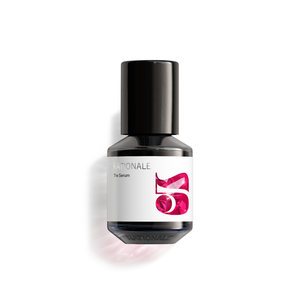
This Peptide Complex is the core of #4 The Nourishing Eye Crème – RATIONALE's most peptide-intensive formulation, designed for the orbital (or eye) area where the skin is thinnest, collagen declines earliest, and the effects of expression and environmental damage appear first. In a 56-day clinical trial with 30 participants, 94% reported their skin looked and felt smoother, 94% reported overall skin appearance was improved, 93% reported skin felt softer, and 87% reported it appeared more lifted.
Incorporating Peptides into Your Skincare Ritual
One of the real advantages of peptides is how well they play with other actives. Unlike some ingredients that require careful sequencing or conflict with certain formulations, peptides work comfortably alongside Vitamin A, Vitamin C, Niacinamide, and Hydroxy Acids – making them a natural part of a complete ritual rather than a specialist step that requires compromise.
When and How to Apply
Peptides work morning and evening. Signal and carrier peptides support collagen synthesis throughout the day and night; neurotransmitter-modulating peptides are most relevant during waking hours when expression is active; structural peptides complement the repair processes that continue overnight. A multi-peptide formulation can be incorporated into both AM and PM rituals, applied to freshly cleansed skin before richer crèmes.
Peptides with Other Actives
With Vitamin A (Retinol, Retinal): Fully compatible. Retinoids accelerate cell renewal while peptides signal collagen production–complementary pathways that together offer a more complete approach to visible ageing than either does alone.
With Vitamin C: Compatible and genuinely synergistic. Vitamin C is a co-factor in collagen synthesis; peptides signal the upstream production of new collagen. The two actives address different stages of the same process.
With Niacinamide and Hydroxy Acids: No conflict. Niacinamide reinforces the barrier in ways that complement peptide activity; Hydroxy Acids prepare the skin surface to receive subsequent actives more effectively.


Peptides with Other Actives
RATIONALE distributes peptides across the Essential Six Collections, because different peptide classes address different aspects of skin ageing. Within a considered ritual:
#1 The Strengthening Serum contains Acetyl Octapeptide-3, a neurotransmitter-modulating peptide that softens the micro-contractions behind expression lines in the eye and forehead area. Applied in the morning, as part of the protective AM ritual.
#4 The Nourishing Crème contains Oligopeptide-1, which mimics the growth signal that prompts cellular renewal, alongside Acetyl Hexapeptide-37 for progressive expression-line softening. Applied in the morning or evening as a nourishing step.
#4 The Nourishing Eye Crème brings the full Peptide Complex – all six peptides spanning all four classes – to the orbital contour morning and evening. It is RATIONALE's most concentrated peptide formulation.
#6 The Rejuvenating GelCrème includes Tripeptide-9 Citrulline and Hexapeptide-51 within a Bakuchiol-based renewal formulation – structural and longevity-supporting peptides for clients in the earlier stages of Vitamin A use, or those with skin that is more sensitive.
Where to Begin
If peptides are new to your ritual, start with the formulation that targets the area of earliest concern. For most clients, that is the eye area – where the skin is most delicate, collagen declines first, and the signs of ageing accumulate most visibly. #4 The Nourishing Eye Crème, with its Peptide Complex, is the most comprehensive starting point.
Discover Your Peptide Ritual
Skin does not age uniformly, and a peptide ritual works best when it is considered. If you are beginning, #4 The Nourishing Eye Crème offers the most comprehensive introduction to RATIONALE's multi-peptide approach – six peptides across all four classes, applied to the area where the skin's earliest changes are most visible.
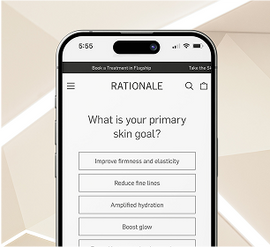
For a personalised ritual recommendation, the RATIONALE Expert Guide provides tailored guidance based on your skin's history and Goals. Or visit a RATIONALE Flagship, where a RATIONALE Educator can guide you through the full Essential Six Collections in person.
Frequently Asked Questions
They work through completely different mechanisms. Oral collagen is broken down during digestion into amino acids; whether those amino acids are then directed to skin collagen production is still an open question in the research. Topical peptides, when properly formulated, are absorbed into the skin and act locally on the fibroblast cells that produce collagen. The two approaches are not in competition; they simply work very differently.
Yes, and the combination is well-supported. Peptides and Vitamin A work on complementary pathways: retinoids accelerating cell turnover at the surface, peptides signalling collagen production in the dermis. There is no chemical conflict. Apply any peptide-containing formulation before your Vitamin A crème in the layering order, and the two actives support rather than compete with each other.
Peptides are among the most well-tolerated active ingredients available. They do not alter skin pH, accelerate cell shedding, or carry a meaningful sensitisation risk. For clients with reactive or compromised skin, peptide-containing formulations can offer meaningful structural support and collagen signalling without an adjustment period. For those not yet ready for Vitamin A, a peptide-rich formulation paired with a Bakuchiol-based renewal step is a considered and effective alternative.
Initial improvements in texture and tone are usually visible within four to six weeks of consistent use. Deeper changes – firmer skin, softer fine lines, improved elasticity – develop over eight to twelve weeks, as newly formed collagen is integrated into the skin's structure. Peptides are not immediate-result actives. Their results are cumulative and lasting, and consistency is what drives them.
They work differently and comparing them as alternatives misses the point. Retinoids drive cellular renewal, improving texture, tone, and the depth of fine lines. Peptides signal collagen and elastin production deeper in the dermis – supporting the skin's architecture rather than its surface renewal rate. A considered ritual uses both: retinoids in the evening for renewal, peptides to maintain the structural foundations that renewal reveals.
The best-evidenced peptides for anti-ageing outcomes are signal peptides, including Palmitoyl Tripeptide-5 and Palmitoyl Hexapeptide-52, or collagen stimulation; Copper Tripeptide-1 for structural support and antioxidant defence; and Tripeptide-9 Citrulline for protecting collagen against glycation.
Written by Eleni Papadopoulos
Eleni is a skincare writer with a background in the beauty and skincare industry, having spent several years working alongside dermal therapists and formulation teams. Her experience has shaped a practical understanding of skin behaviour, ingredients, and treatment pathways. Eleni focuses on translating complex skincare concepts into clear, considered guidance, with an emphasis on efficacy, routine building, and long-term skin health.
References
1. Gorouhi F, Maibach HI. "Role of topical peptides in preventing or treating aged skin." Int J Cosmet Sci. 2009;31(5):327–45.
2. Katayama K, Armendariz-Borunda J, Raghow R, Kang AH, Seyer JM. "A pentapeptide from type I procollagen promotes extracellular matrix production." J Biol Chem. 1993;268(14):9941–9944.
3. Pickart L, Margolina A. "Regenerative and Protective Actions of the GHK-Cu Peptide in the Light of the New Gene Data." Int J Mol Sci. 2018;19(7):1987. DOI: 10.3390/ijms19071987.
4. Errante F, Ledwoń P, Latajka R, Rovero P, Papini AM. "Cosmetic Peptides in Skincare: A Systematic Review of Clinical Evidence." Cosmetics. 2020;7(4):92.