



Key Takeaways
Retinol vs retinal is usually posed as a binary with suggestion you need to pick a winner. It is the wrong question. Retinol and retinal are two forms of Vitamin A that work at different speeds, with benefits that complete each other. The most effective anti-ageing formulations combine both in a single considered crème. This guide explains the science, the case for combining the two molecules, and how to bring a dual Vitamin A formulation into your evening ritual in consideration to skin type, life stage and season.
In a clinical study published in the Archives of Dermatology, topical retinol visibly smoothed fine lines and improved naturally aged skin within twenty-four weeks – the first rigorous confirmation that a form of Vitamin A, used at the right strength, could meaningfully change the course of ageing (Kafi et al., 2007).
That was almost two decades ago. Since then, a second form of Vitamin A, retinaldehyde (more commonly called retinal), has stepped into the conversation as the faster, more potent cousin. Much of the conversation around Vitamin A may suggest you need to pick a side. The more sophisticated answer, and one formulation scientists have been moving towards, is that retinol and retinal are not rivals but complementary molecules – and the most effective Vitamin A skincare combines both in a single considered formulation.
This article explores the Vitamin A family, the distinct benefits of each molecule, why combining them delivers more than either alone, how to bring a dual retinoid formulation into your evening ritual, and what the research says about results, timelines and safety across every life stage.


What Is Vitamin A in Skincare? The Retinoid Family Decoded
Vitamin A is not a single molecule but a family. In skincare, that family is known as the retinoids: a group of compounds that all eventually speak to the same receptors inside your skin cells, but each takes a different route to get there.
The active form, the molecule your skin actually uses, is retinoic acid, also called tretinoin. It is the most potent of the group and available only by prescription in Australia. Every other retinoid in a topical formulation is a more refined, better-tolerated way to deliver retinoic acid to the skin. The conversion path runs: Retinyl Esters → Retinol → Retinaldehyde → Retinoic Acid. Each arrow is a step the skin performs, and at each step a small amount of the molecule is lost.


This is why conversion matters. Retinyl esters are gentle but relatively weak as they sit three steps from activity. Retinol sits two steps away. Retinal sits just one step from retinoic acid, which means a smaller amount can do more work. A 2023 review in Biomolecules (Quan) confirmed that Vitamin A supports collagen, helps skin renew at a healthy pace, and protects against the effects of solar and environmental damage.
The Vitamin A benefits for skin – firmer texture, more even tone, smoother fine lines – all arrive at the same destination. The molecules differ only in how far from it they begin, and therefore in how they behave on the way. RATIONALE Research approaches considered retinal skincare from this same conversion biology.
Retinol vs Retinal: The Distinct Benefits of Each
Retinol has been the default anti-ageing molecule for thirty years: stable, well-tolerated, and supported by some of the most robust clinical data in skincare. Retinal is newer to the mainstream in Australia but not new to research, having been studied for more than two decades. Looked at side by side, the picture is one of compatibility and completeness, not competition.
The benefits of retinol. Retinol's strength is steadiness. Its two-step conversion gives the skin a built-in cushion against overstimulation, which is why it suits reactive and new-to-Vitamin A skin so well. It carries the longest run of clinical evidence of any cosmetic retinoid: support for collagen, fine-line smoothing, more even tone and elastin support are all documented (Kafi et al., 2007; Rossetti et al., 2011). Retinol is the maintenance molecule: the considered baseline for long-term anti-ageing work.
The benefits of retinal. Retinal's advantage is closeness and speed. One step closer to retinoic acid means a lower concentration does more work. A 2018 randomised, double-blind trial (Kwon et al., Journal of Cosmetic Dermatology) showed retinaldehyde at 0.1% and 0.05% produced measurable improvements in photo-aged skin over sixteen weeks. A foundational paper (Fluhr et al., Dermatology, 1999) found retinal worked nearly as effectively as retinoic acid while remaining about as gentle as retinol making it the rare combination of potency and composure. The retinal benefits include faster visible change, results at lower concentration, and a gentleness that makes retinal for sensitive skin a credible option where higher-percentage retinol might not be.
Each molecule's strength addresses the other's limitation. That is precisely the principle that makes combining them in a single formulation so effective.
Why the Most Effective Vitamin A Formulations Combine Both
A considered formulation is a composition, not a list of actives; ingredients chosen because their synchronicity, or behaviour together, is greater than the sum of their individual effects. For Vitamin A, the case for combining retinol and retinal rests on four principles.
Working on different timelines. Retinal works quickly, delivering visible refinement in the first weeks. Retinol works steadily, supporting collagen and elastin over months. A formulation that contains both offers immediate visible cues, including refined texture, improved radiance, alongside the long-term structural work that defines lasting anti-ageing results.
Less Vitamin A on the skin for the same result. Because retinal is effective at a tenth of retinol's concentration, a blended formulation can deliver real activity without leaning on the high retinol percentage that often drives irritation. The total Vitamin A on the skin barrier is reduced; the result is not. For sensitive skin, or those moving through perimenopause, menopause and beyond, this is often the difference between a ritual sustained for years and one abandoned after a matter of weeks.
A broader spread of Vitamin A benefits. Research links each molecule with a slightly different focus along the shared pathway: retinol with elastin support deeper in the skin (Rossetti 2011); retinal with faster reversal of photo-ageing and a gentler clinical profile (Kwon 2018; Fluhr 1999). Combining both unlocks a wider range of the Vitamin A benefits for skin than either delivers alone: firmness, elasticity, even tone, refined texture and luminosity in a single formulation.
A stable formulation is the prerequisite. Both molecules are sensitive to light and oxygen. Holding them stable together in a single crème, through protective encapsulation, the right base, opaque packaging and careful pH, is far more demanding than formulating with one alone. Formulation technology, not just an ingredient list, will determine whether a combined Vitamin A formulation still performs at month six.


How to Incorporate Retinol and Retinal into Your Skincare Routine
Once retinol and retinal are combined in one formulation, the variable to adjust is not which molecule tonight but how often, calibrated to your skin.
Timing: evenings, not mornings. Vitamin A should be applied at night. Retinoids break down under sunlight, and the skin's own repair work, which retinoids help amplify, is at its most active during sleep. A daily SPF 30 or higher in the morning is non-negotiable for anyone using Vitamin A.
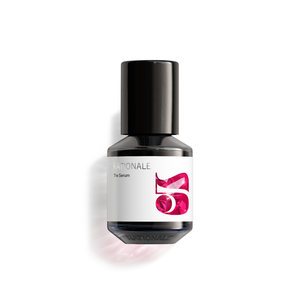
RATIONALE's considered dual Vitamin A formulation. Within the Rejuvenating Collection, #6 The Rejuvenating Night Crème is RATIONALE's high-performance evening formulation combining retinol and retinal in a single stabilised crème, drawing on the complementary pace of both molecules. In a 28-day on-skin study of twenty participants, 95% observed an increase in skin firmness and 100% reported visible improvements in both skin hydration and radiance; by fifty-six days, 100% reported a visible lifting effect and 81% observed improvement in the appearance of fine lines and wrinkles.
New to Vitamin A? The most common mistake with retinoids is pace, not formulation. Begin with one application per week for the first two weeks. If the skin remains comfortable, progress to two evenings per week in weeks three and four, and to three evenings per week by week six. Many Clients, including those with sensitive or reactive skin, settle at three to five evenings weekly as a long-term cadence. The skin rewards patience more than frequency.
If your skin is resilient and already using actives. Those already familiar with retinoids can begin at three evenings per week, progress to alternate nights by week four, and, if the skin remains comfortable, move to nightly use. Nightly use is not the goal for everyone; it is simply available to skin that tolerates it well.
What to pair, what to separate. Niacinamide is an ideal companion; research consistently shows it supporting the skin barrier and complementing retinoid performance, which is why retinol with niacinamide pairings perform so well. Hyaluronic Acid and well-formulated peptides are similarly supportive. Separate Vitamin A from potent Vitamin C, reserving its use for mornings.


The Science: Results, Timelines and Safety Across Life Stages
Realistic expectations matter more than any choice of retinoid: almost all frustration with Vitamin A comes from impatience rather than formulation.
The week-by-week timeline. In the first two weeks, the skin's renewal cycle picks up; the skin can look subtly refined but may feel drier. Between weeks four and six, texture refines—pores look smaller, the surface feels smoother. From weeks eight to twelve, fine lines become visibly smoother and tone becomes more even.
The retinization phase. The dryness, flaking or occasional small blemishes that appear in the first four weeks have a name: retinization – often referred to as the retinol purge. It is not a problem with the skin; it is the skin learning a new rhythm of renewal. The considered response is not to abandon the ritual but to moderate it by reducing frequency, buffering the retinoid with a moisturiser applied beforehand, and protecting the barrier with fortifying and nourishing formulations. This typically resolves by week six.
Menopause and perimenopause. As oestrogen falls during perimenopause, collagen loss speeds up; dermatological literature consistently reports up to 30% loss in the first five years after menopause. This is the life stage at which Vitamin A matters most, and the stage at which many people abandon it over sensitivity concerns. A combined retinol and retinal formulation is well-suited here: the lower total Vitamin A load delivers mature-skin results without the barrier strain of a high-percentage single-molecule retinol.
Begin Your Vitamin A Ritual
A considered Vitamin A ritual is not about choosing between retinol and retinal. It is about understanding how they work together, selecting a formulation that combines both intelligently, and allowing the skin the pace and recovery it needs to respond.
For personalised guidance on where to start with RATIONALE, connect with our Client Services Team to book a Virtual Consultation, or book in for a Signature Consultation at your nearest Flagship.
Frequently Asked Questions
Yes. As oestrogen levels fall during perimenopause, collagen loss speeds up, and Vitamin A is among the most well-evidenced topical interventions for this life stage. A combined retinol and retinal formulation is often better tolerated than a high-percentage single-molecule retinol, because it delivers results at a lower total retinoid load — a meaningful advantage for a barrier already adjusting to a new hormonal landscape.
Retinol and retinal are both forms of Vitamin A that the skin converts into retinoic acid, the active molecule behind every anti-ageing benefit. Retinal sits one step from retinoic acid; retinol sits two. That single-step difference means retinal delivers visible results at a lower concentration and somewhat faster,while retinol offers a longer,steadier and more thoroughly studied pathway. The two have complementary roles, which is why the most considered formulations combine them.
Yes, and the most effective way is to use a single formulation that contains both, rather than layering separate retinol and retinal formulations on the same evening. A dual Vitamin A crème combines their pace (retinal for speed, retinol for steadiness) and holds both molecules stable together. Layering two separate retinoid formulations raises the total irritation load unnecessarily.
For clients new to Vitamin A, begin with one evening per week and build gradually to three evenings per week by week six. Sensitive or reactive skin may settle at two to three evenings weekly with a moisturiser-buffering step. Resilient skin already accustomed to actives can progress to nightly use if well-tolerated. Consistency and patience matter more than frequency.
The earliest refinement in texture is typically visible between four and six weeks. The smoothing of fine lines becomes visible between weeks eight and twelve. Consistency matters more than concentration.
Reduce frequency before reducing concentration. Buffer by applying a moisturiser first, then the Vitamin A crème over the top, and extend the recovery evenings in between. Most retinization or purging resolves within six weeks; if discomfort persists, step back for a fortnight and reintroduce at a single weekly application.
Written by Eleni Papadopoulos
Eleni is a skincare writer with a background in the beauty and skincare industry, having spent several years working alongside dermal therapists and formulation teams. Her experience has shaped a practical understanding of skin behaviour, ingredients, and treatment pathways. Eleni focuses on translating complex skincare concepts into clear, considered guidance, with an emphasis on efficacy, routine building, and long-term skin health.
References
- Kafi R, Kwak HSR, Schumacher WE, et al. Improvement of naturally aged skin with vitamin A (retinol). Archives of Dermatology. 2007;143(5):606–612.
- Rossetti D, Kielmanowicz MG, Vigodman S, et al. A novel anti-aging mechanism for retinol: induction of dermal elastin synthesis and elastin fibre formation. Journal of Cosmetic Dermatology. 2011;10(3):217–226.
- Quan T. Human skin aging and the anti-aging properties of retinol. Biomolecules. 2023;13(11):1614.
- Kwon HS, Lee JH, Kim GM, Bae JM. Efficacy and safety of retinaldehyde 0.1% and 0.05% creams used to treat photoaged skin: a randomized double-blind controlled trial. Journal of Cosmetic Dermatology. 2018.
- Fluhr JW, Vienne MP, Lauze C, Dupuy P, Gehring W, Gloor M. Tolerance profile of retinol, retinaldehyde and retinoic acid under maximized and long-term clinical conditions. Dermatology. 1999;199(Suppl 1):57–60.
- Royal Australian and New Zealand College of Obstetricians and Gynaecologists (RANZCOG) and American College of Obstetricians and Gynecologists (ACOG) guidance on topical retinoid avoidance during pregnancy.